Insights & Publications
Strategic Outlook analysis, Policy Signal briefings, and Feature Stories — the complete GPSF library in one place.
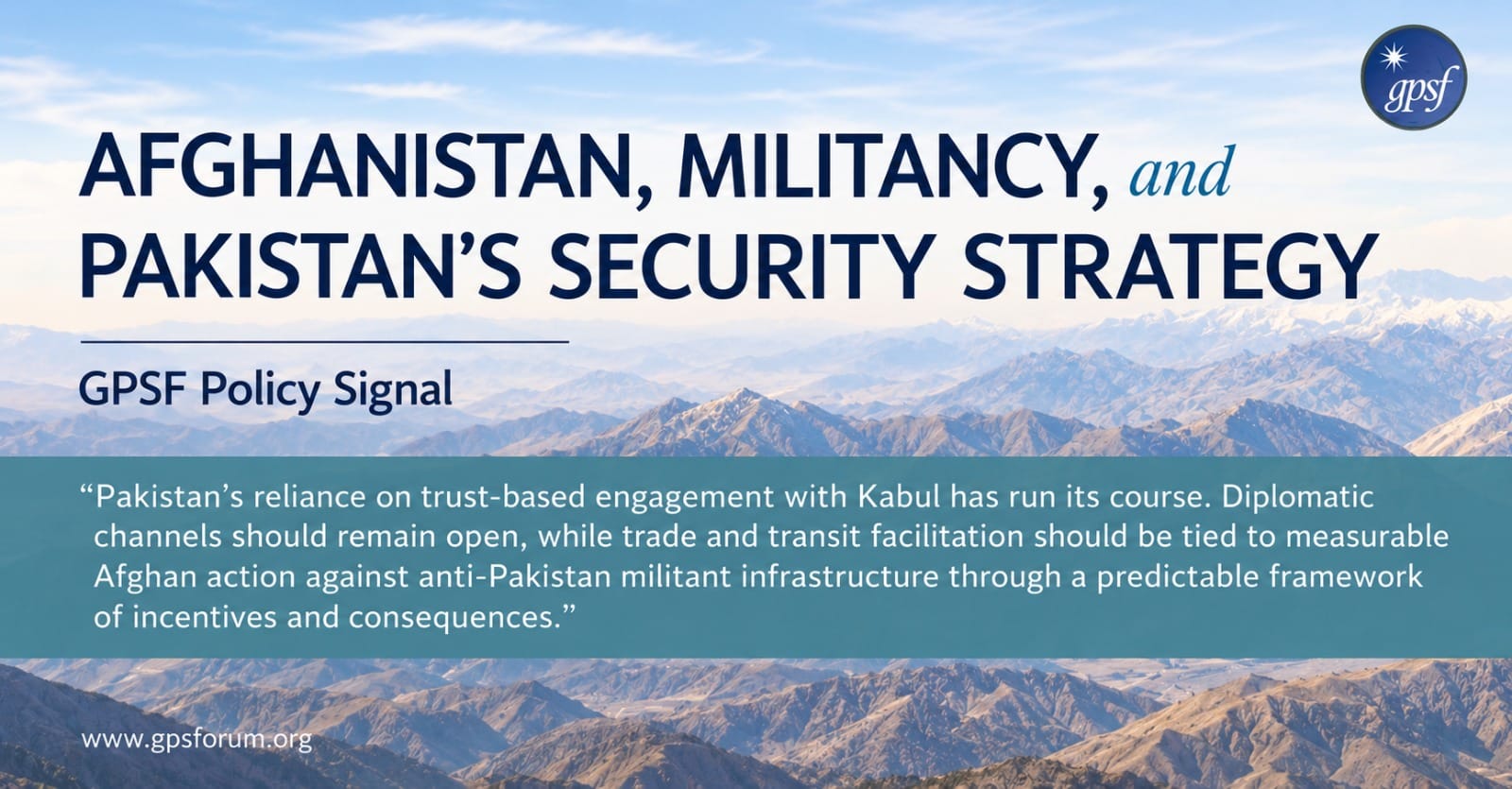
Afghanistan, Militancy, and Pakistan's Security Strategy
Pakistan faces a persistent security threat emanating from Afghanistan, where militant sanctuary, Indian interference, and governance gaps in Khyber Pakhtunkhwa increasingly reinforce one another. GPSF examines what an integrated strategy requires.
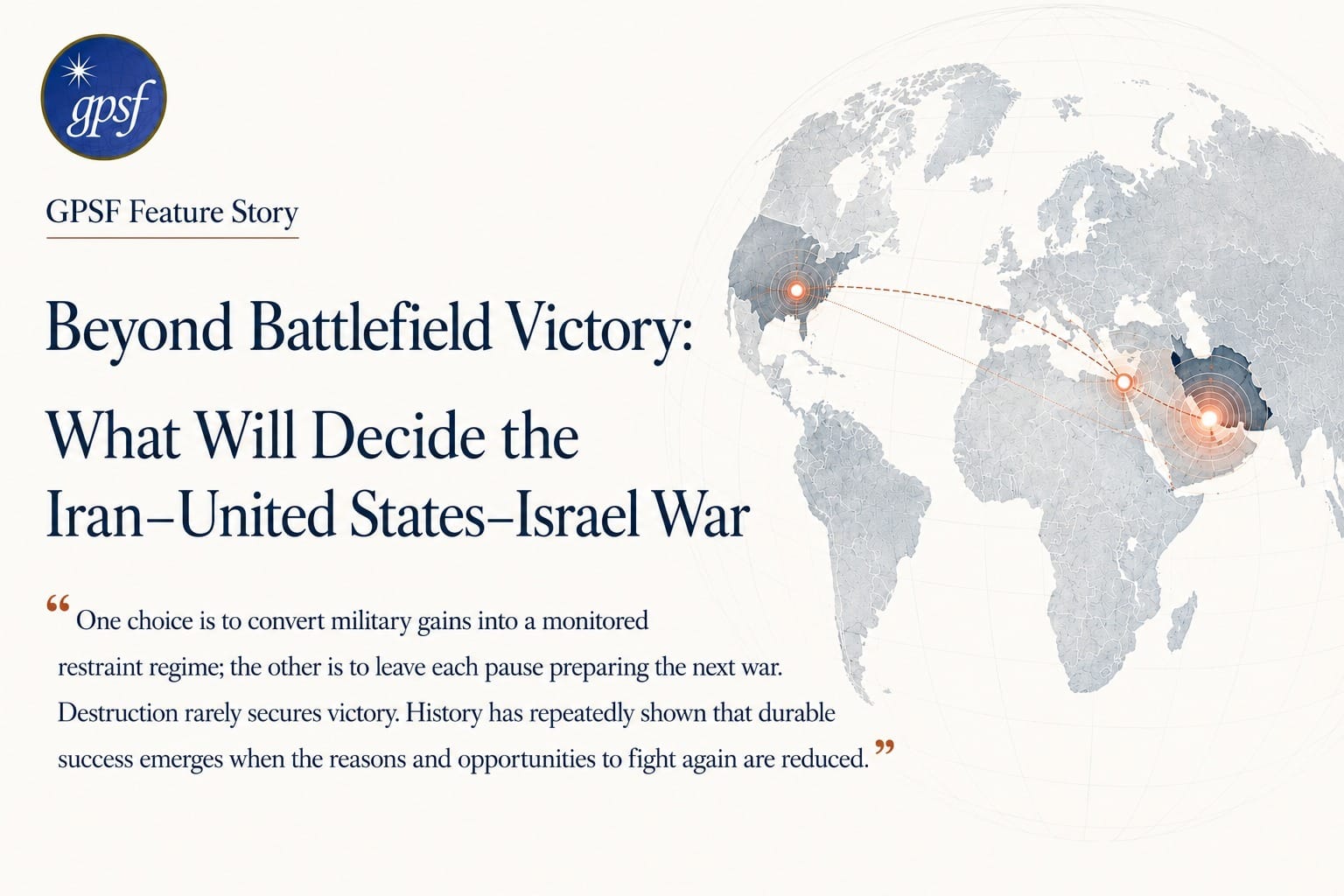
Beyond Battlefield Victory: What Will Decide the Iran-United States-Israel War
Military superiority can end a campaign without resolving the conflict behind it. GPSF examines the five practical tests, four possible outcomes, and the minimum bargain needed to prevent the Iran-US-Israel war from becoming another pause before the next war.
Beyond the Brink: US Leverage Operations at Hormuz, Iran's Resolve, and the Imperative of Diplomatic Off-Ramps
As US strikes and Iranian resistance escalate around the Strait of Hormuz, GPSF examines whether calibrated pressure can still convert into negotiated equilibrium, and what is at stake for Pakistan and the wider global economy.
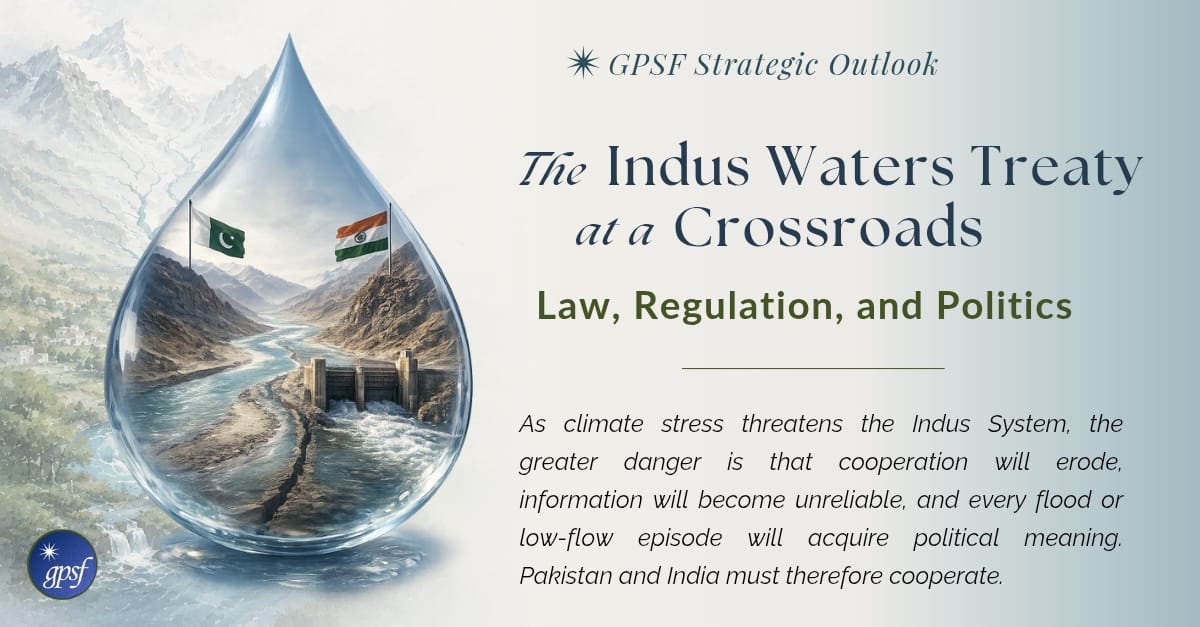
Law, Regulation and Politics: Indus Waters Treaty at a Crossroads
The Indus Waters Treaty is under serious strain after India's move to hold it 'in abeyance.' GPSF examines the legal dispute, geopolitical stakes, and a practical strategy to preserve the Treaty amid climate stress.
The Peace Dividend: Iran-US Deal Through the Lens of Human Security
An Iran-US peace deal is usually framed around nuclear safeguards, sanctions, and oil markets. Seen through a human security lens, de-escalation is about economic, food, energy, health, and community security for ordinary citizens.
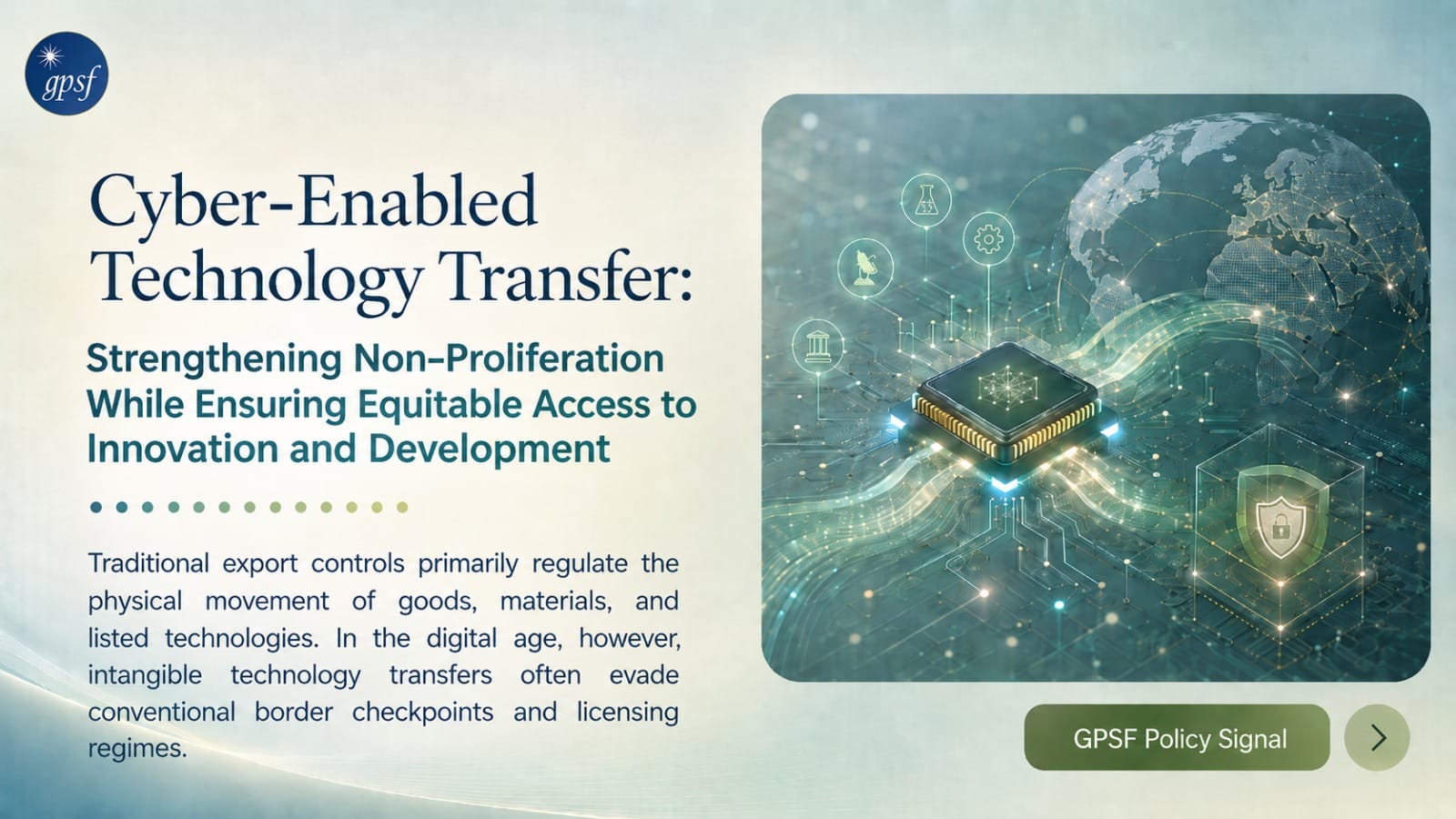
Cyber-Enabled Technology Transfer: Strengthening Non-Proliferation While Ensuring Equitable Access to Innovation and Development
Physical hardware is no longer the sole pathway to proliferation. GPSF examines how to secure intangible, cyber-enabled technology transfers while strengthening non-proliferation and upholding equitable access to innovation and development.
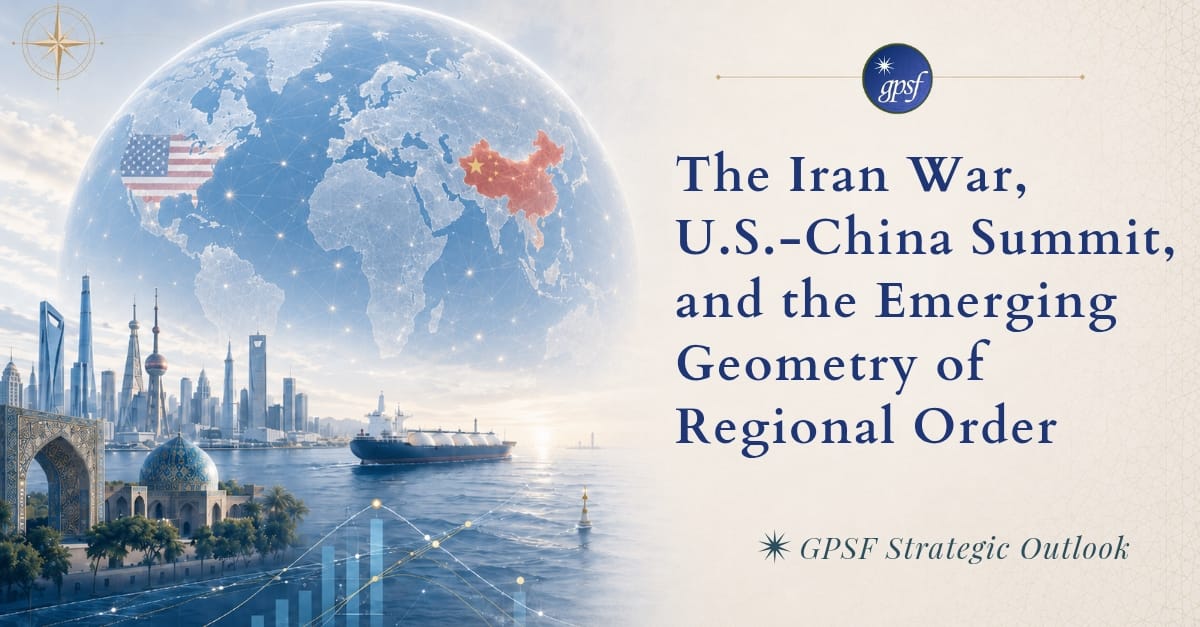
The Iran War, U.S.-China Summit, and the Emerging Geometry of Regional Order
The Trump-Xi summit has become a test of whether great-power diplomacy can stabilize an order strained by the Iran war, Hormuz disruption, energy insecurity, and technology rivalry.
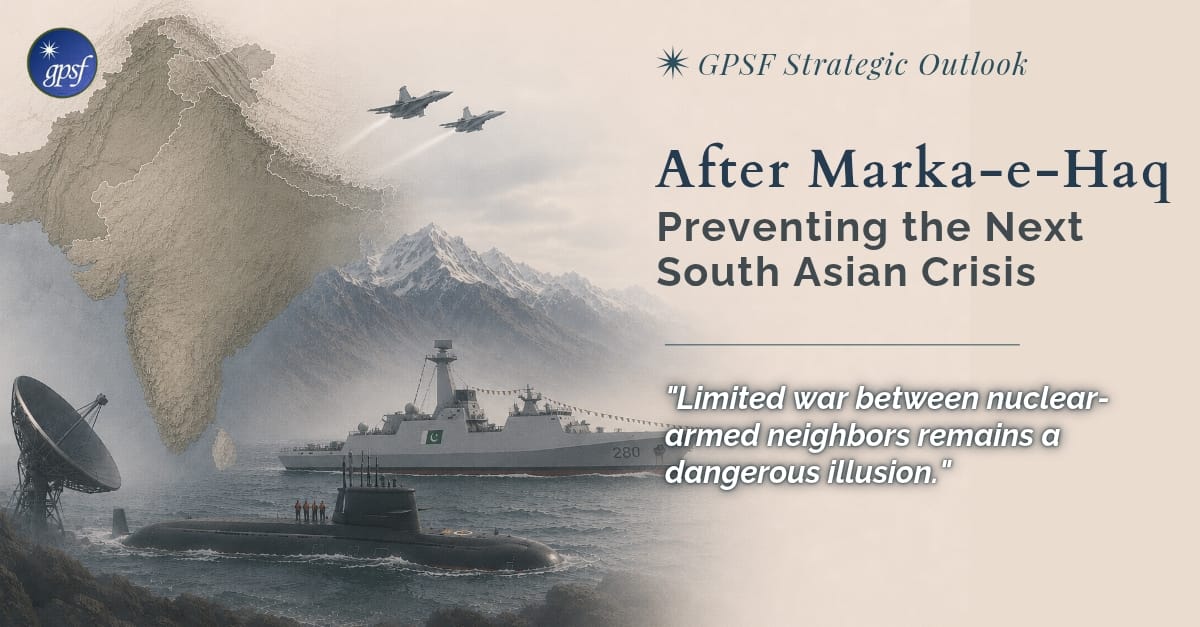
After Marka-e-Haq: Preventing the Next South Asian Crisis
One year after the May 2025 India-Pakistan conflict, GPSF examines whether South Asia can absorb the lessons of Marka-e-Haq and Operation Bunyanum Marsoos before the next crisis unfolds.
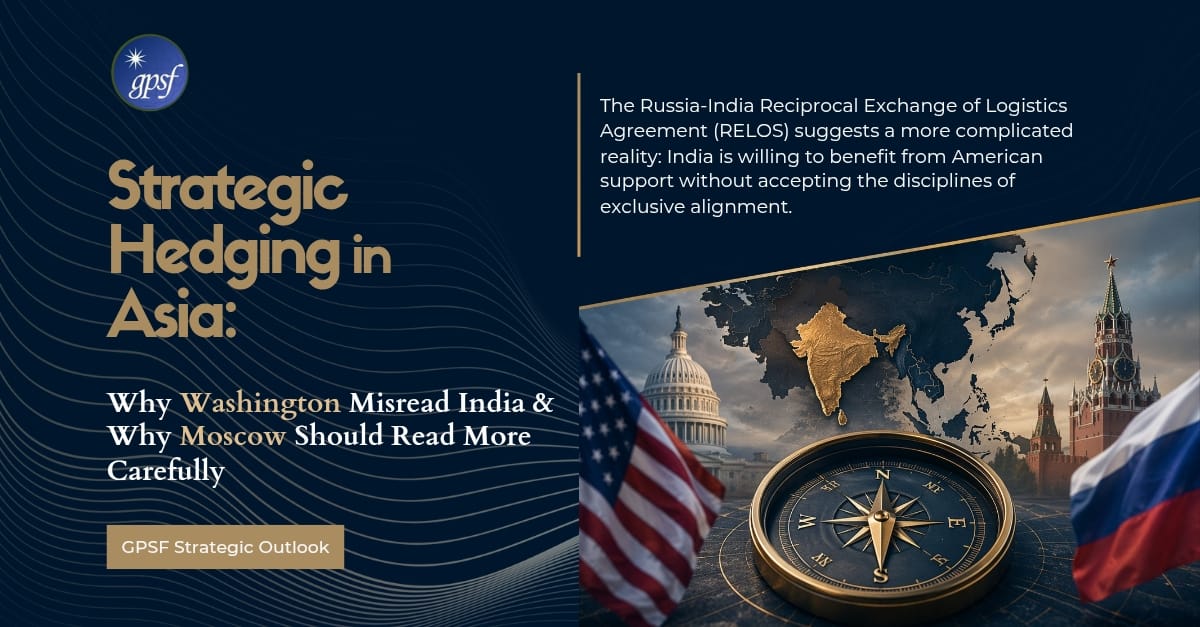
Strategic Hedging in Asia: Why Washington Misread India and Why Moscow Should Read More Carefully
The Russia-India RELOS agreement reveals India's strategic method: maximising room for manoeuvre across competing poles of power. An analysis of Washington's flawed alignment assumptions, Moscow's misplaced optimism, and the broader pattern of competitive hedging reshaping Asia.
The Fog of Talk: Can Middle East Diplomacy Outrun War?
Pakistan has earned diplomatic credit for averting wider war, but the ceasefire remains a temporary breathing space. An analysis of mixed signals from Washington, Israel's maximalist strategy, and whether a strategic compact can replace tactical pause.
Where Could the Islamabad Talks Take the Middle East Ceasefire?
Pakistan has re-emerged as the principal facilitator of direct U.S.-Iran negotiations. The primary question is whether the Islamabad Talks can convert a narrow pause in hostilities into an organized political process that prevents renewed escalation.
Creating a Green Tourism Ecosystem in Pakistan: Policies and Practical Pathways
The real policy question is no longer whether Pakistan has tourism potential. It is whether Pakistan can build a green tourism ecosystem that protects fragile landscapes, improves visitor reliability, creates local income, and keeps destinations investable over time.
A Short U.S.-Israeli War Is No Substitute for Strategy
An analysis of the unfolding strategic realities of the U.S.-Israeli war, Iran's position, energy contradictions, and Pakistan's important role in diplomatic de-escalation.
Crisis Behavior in South Asia Post-May 2025
Analysis of South Asian crisis behavior post-May 2025: how global interdependence, economic vulnerability, and disciplined escalation control are shaping a new strategic reality.
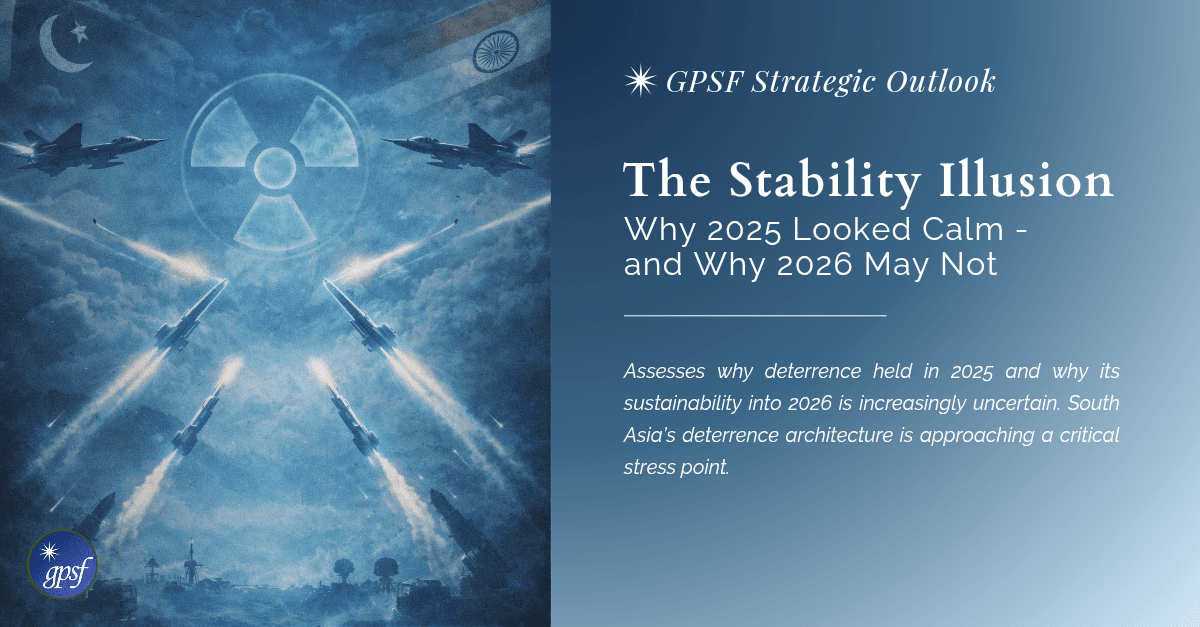
The Stability Illusion: Why 2025 Looked Calm - and Why 2026 May Not
An end-year strategic assessment examining why deterrence held in 2025 and identifying risk trajectories for 2026: decision-time compression, dual-use ambiguity, and weakening normative firebreaks.
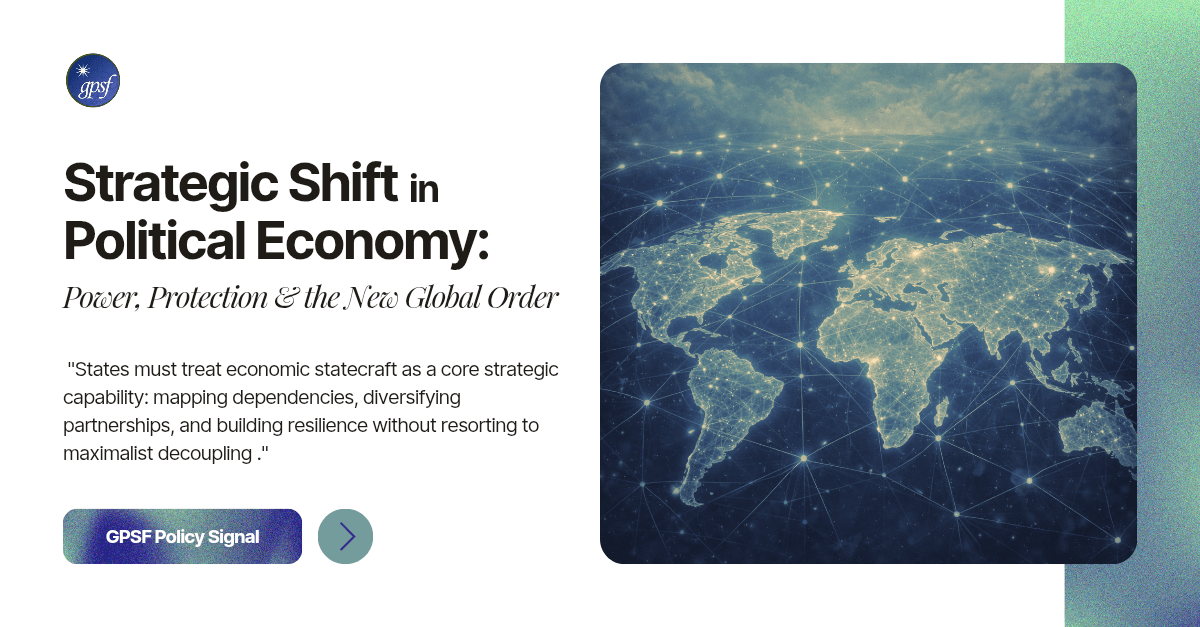
Strategic Shift in Political Economy: Power, Protection & the New Global Order
The structure of global geopolitics has undergone a fundamental shift. Power and influence are exercised less through military dominance but more through the management of economic leverage, security guarantees, and institutional authority.
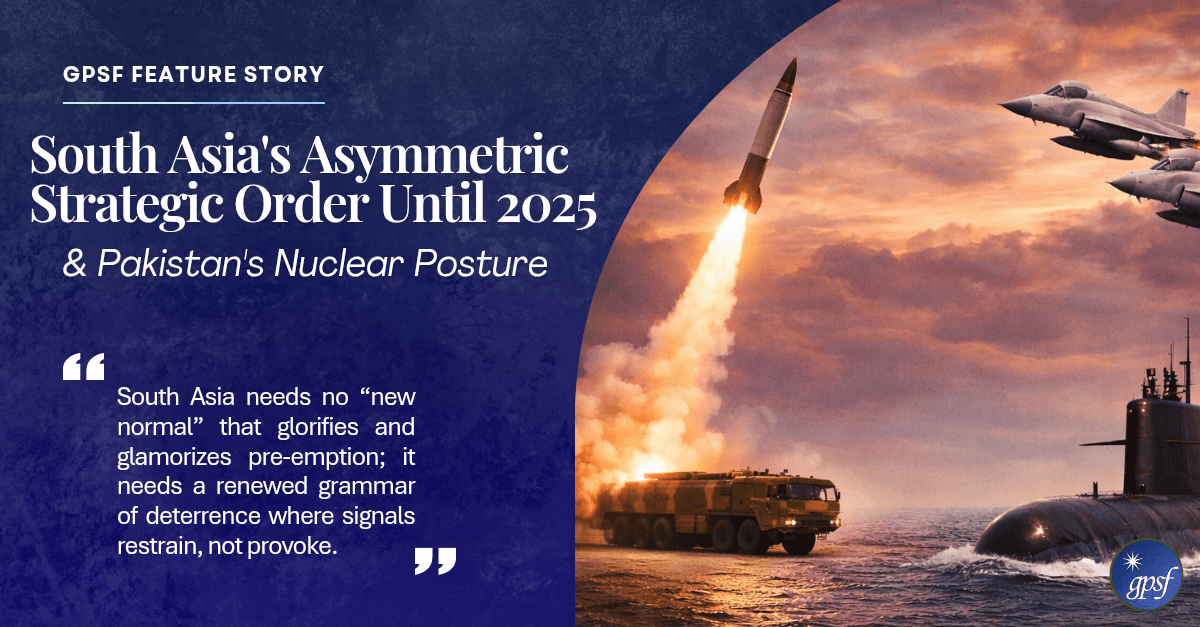
South Asia's Asymmetric Strategic Order Until 2025 & Pakistan's Nuclear Posture
An in-depth analysis of South Asia's strategic environment, Pakistan's nuclear posture, and the evolving deterrence dynamics shaping regional stability.
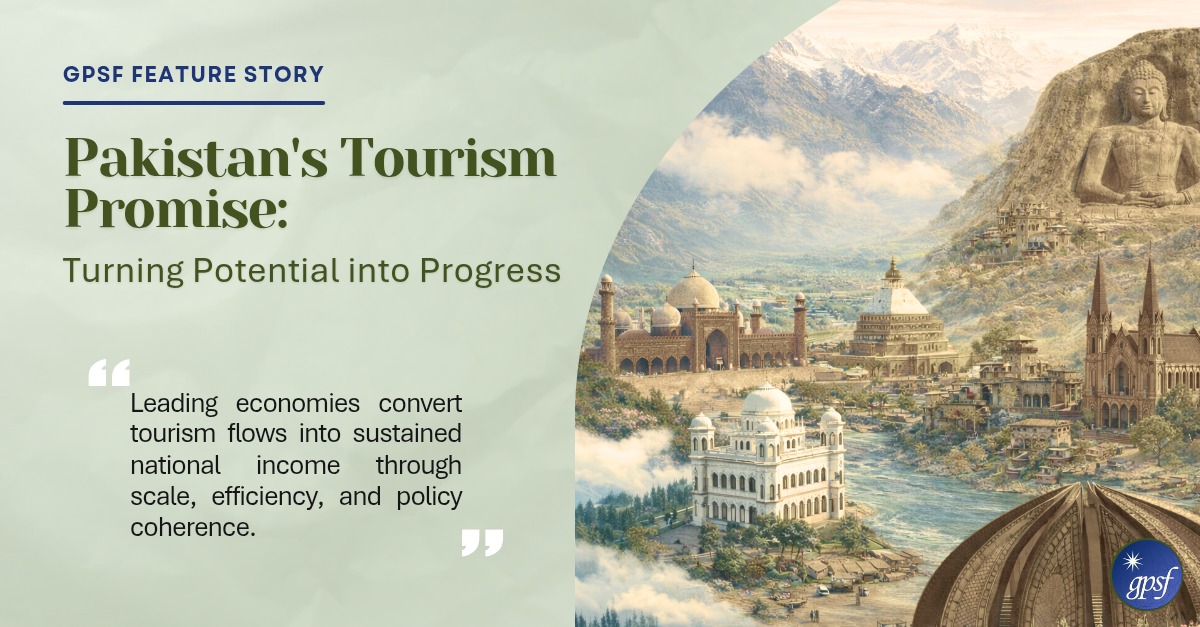
Pakistan's Tourism Promise: Turning Potential into Progress
Tourism today sits at the intersection of economic growth, employment, connectivity, and national image-building. How Pakistan can convert tourism flows into sustained national income through scale, efficiency, and policy coherence.
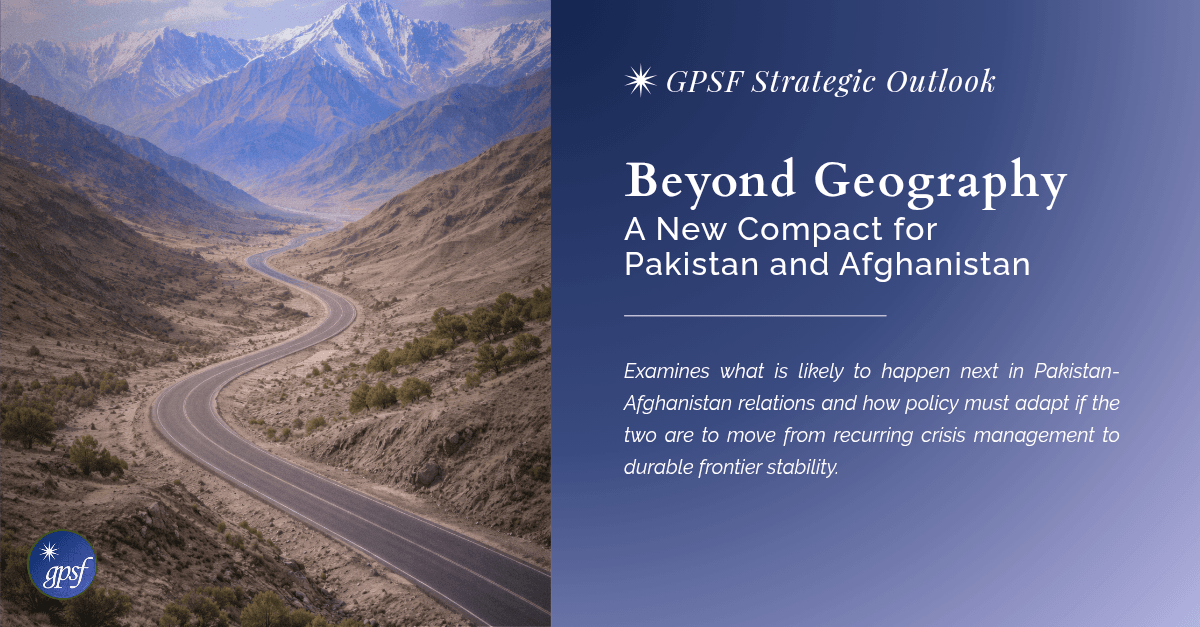
Beyond Geography: A New Compact for Pakistan and Afghanistan
The post-2021 Afghan order has stabilized neither the region nor Pakistan's western frontier. This outlook examines how policy must adapt from recurring crisis management to durable frontier stability.